

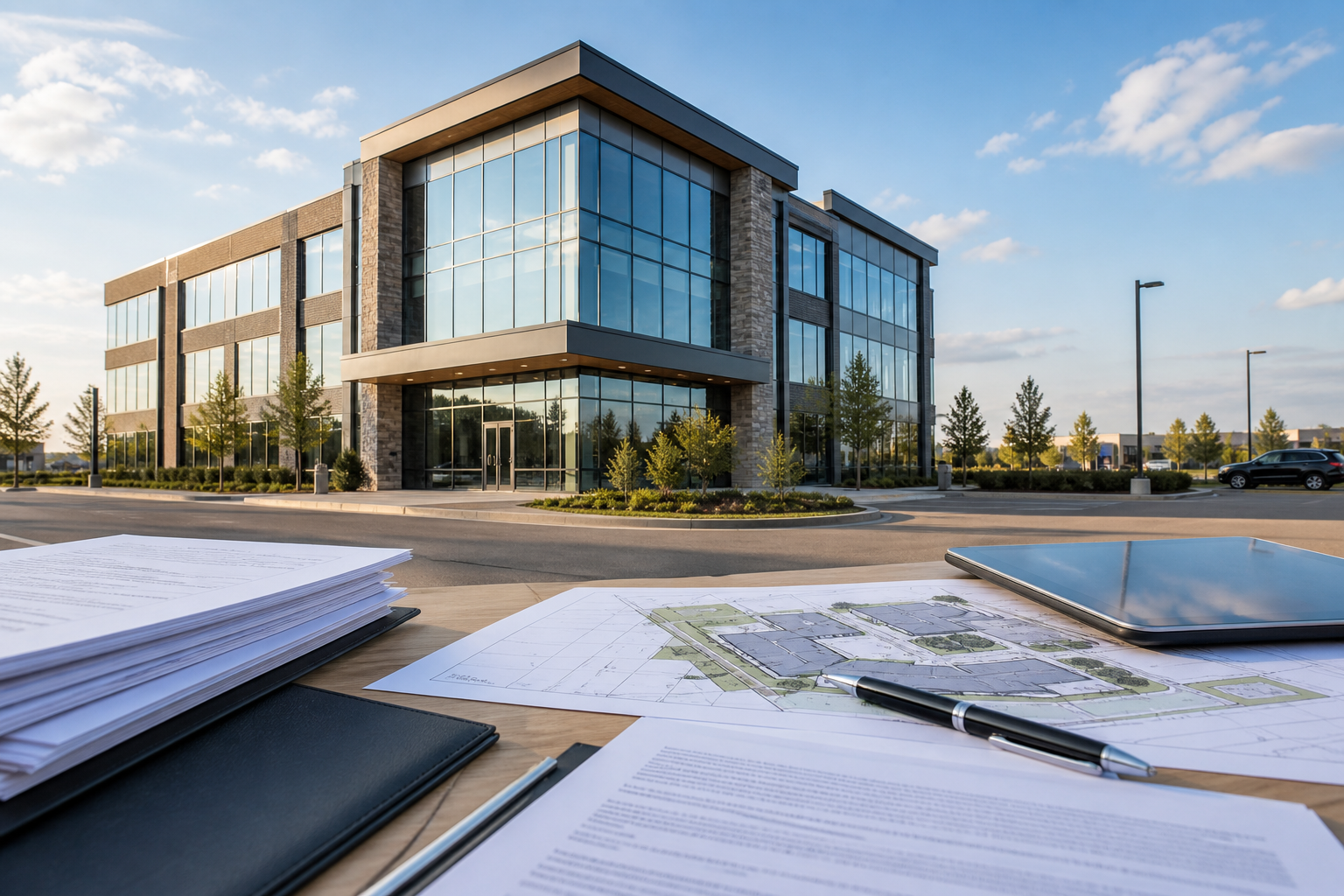
Commercial Property Due Diligence is an essential step before buying, selling, leasing, or developing commercial real estate in Alberta. For business owners, investors, landlords, and developers in Airdrie, Calgary, and Rocky View, the legal details behind a commercial property transaction can affect financing, liability, future use, development plans, and long term business operations. Warnock & Associates assists clients with real estate transactions, corporate and commercial matters, and related legal issues across Airdrie and surrounding Alberta communities.
Commercial real estate is rarely just a property purchase. It is often tied to a larger business decision. A buyer may be purchasing a building for their company, acquiring land for future development, buying a rental property, or reviewing a commercial space connected to a business acquisition. A seller may need to address title matters, financing payouts, tenant issues, or closing obligations. In each case, proper due diligence helps identify legal concerns before the transaction becomes binding or before money changes hands.
Why Commercial Property Due Diligence Matters
Commercial Property Due Diligence protects the buyer or seller from signing documents without understanding the legal and financial consequences. In Alberta, commercial real estate transactions often involve contracts, title searches, financing documents, lease agreements, municipal requirements, corporate structures, and closing conditions. Missing one key issue can create unnecessary cost, delay, or dispute.
For buyers, due diligence helps confirm whether the property can be used for the intended purpose. For sellers, it helps ensure the transaction can close smoothly and that any title, lease, or payout matters are dealt with properly. For business owners, it helps connect the property decision with the broader commercial strategy.
A commercial property may look suitable at first glance, but legal review can uncover issues such as:
→ Restrictions on title
→ Existing registrations or encumbrances
→ Unclear lease obligations
→ Financing conditions
→ Unpaid municipal amounts
→ Development or zoning concerns
→ Unresolved tenant issues
→ Closing document problems
→ GST considerations
→ Corporate authority questions
Warnock & Associates lists real estate transactions as one of its core practice areas and assists with residential and commercial real estate matters, including purchases, sales, lease agreements, financing, mortgages, commercial real estate, developments, and related disputes.
The Difference Between Residential and Commercial Real Estate
Commercial real estate transactions are usually more complex than standard residential purchases. A residential purchase often focuses on the home, mortgage, title transfer, and standard closing adjustments. A commercial transaction may involve business operations, tenants, environmental considerations, development plans, corporate ownership, financing structures, and lease arrangements.
Commercial parties are generally expected to understand and negotiate the terms of their agreements. That makes the written contract extremely important. The purchase agreement, lease agreement, financing documents, and closing documents must be reviewed carefully because they define the rights and obligations of the parties.
In many commercial transactions, the lawyer’s role is not limited to transferring title. Legal support may include reviewing the agreement, identifying risks, communicating with the lender, checking title, preparing closing documents, addressing GST issues, reviewing leases, and ensuring the transaction closes according to the agreed terms.
For a buyer or seller in Airdrie, working with an Airdrie real estate lawyer helps ensure the transaction is reviewed in the local Alberta legal context.
Key Documents to Review Before Closing
Commercial property transactions depend on accurate documents. Before signing or closing, the parties should understand what each document does and whether it creates ongoing obligations.
Purchase and Sale Agreement
The purchase and sale agreement is the foundation of the transaction. It should clearly identify the property, purchase price, deposit, conditions, closing date, representations, warranties, included assets, excluded assets, and obligations before closing.
Important questions include:
→ What conditions must be satisfied before the deal becomes firm?
→ Is financing approval required?
→ Are lease documents or tenant information required?
→ Are environmental reports needed?
→ Are there restrictions on use or development?
→ What happens if closing is delayed?
→ What documents must each party deliver?
A commercial purchase agreement should not be treated as a formality. Once signed and conditions are waived or satisfied, the parties may be legally bound to complete the transaction.
Title Search and Registered Interests
A title search helps confirm legal ownership and identifies registered interests affecting the property. These may include mortgages, caveats, utility rights of way, easements, restrictive covenants, builder’s liens, or other registrations.
A registered interest does not automatically mean the transaction cannot proceed, but it must be understood. Some registrations may need to remain on title, while others may need to be discharged before or at closing.
The Alberta Land Titles system provides the framework for ownership and registered interests in land. Buyers should understand that title review is a legal step, not just an administrative search.
Financing and Mortgage Documents
Commercial financing can be more detailed than residential financing. Lenders may require security over the property, corporate guarantees, personal guarantees, assignments of rents, general security agreements, insurance confirmations, and solicitor reporting.
A borrower should understand what is being secured, who is guaranteeing the debt, and what obligations continue after closing. A seller should understand how existing financing will be discharged and whether payout statements are required.
Warnock & Associates includes financing and mortgages within its real estate transaction services, including standard mortgages, refinancing agreements, vendor take back mortgages, rent to own agreements, and security agreements involving land.
Lease Agreements and Tenant Obligations
If the property is leased, the lease must be reviewed before closing. A commercial property with tenants is not only a real estate asset. It is also a contractual relationship with ongoing rights and obligations.
Lease review may include:
→ Rent payable
→ Operating costs
→ Renewal rights
→ Tenant improvement obligations
→ Assignment and sublease rights
→ Default provisions
→ Maintenance responsibilities
→ Insurance obligations
→ Use restrictions
→ Landlord consent requirements
If the buyer is purchasing the property as an investment, the leases may affect income, financing, valuation, and future flexibility. If the buyer intends to occupy the property, existing tenant rights may limit when and how the buyer can use the space.
Municipal, Zoning, and Development Considerations
A commercial property must be suitable for the buyer’s intended use. The legal right to own a property is not the same as the right to operate every type of business from that property. Municipal rules, land use bylaws, development permits, occupancy requirements, and business licensing may affect whether the intended use is allowed.
For example, a buyer may want to use a building for office space, retail operations, automotive services, food service, warehousing, childcare, medical use, or mixed commercial use. Each use may be treated differently under municipal rules.
Airdrie and other Alberta municipalities may have specific land use requirements that affect commercial property use. Buyers should confirm use requirements early, especially before removing conditions.
Legal review can help identify whether additional municipal due diligence is required before closing. This is especially important for buyers purchasing land for development or redevelopment.
GST and Commercial Real Estate
GST may apply to many commercial real estate transactions in Canada. Whether GST applies, who must remit it, and how it should be handled at closing can depend on the nature of the property, the parties, and the transaction structure.
GST should be addressed clearly in the purchase agreement and closing process. Buyers and sellers should obtain appropriate tax advice where needed, but the legal documents should still reflect how GST is being treated.
This issue should not be left until the last moment. A misunderstanding about GST can affect closing funds, reporting obligations, and post closing liability.
Corporate Ownership and Authority
Many commercial properties are owned or purchased by corporations. When a corporation is involved, the lawyer may need to confirm corporate authority, signing authority, shareholder or director approvals, and consistency between the transaction documents and corporate records.
For business owners, this is where real estate law and corporate and commercial law often connect. A property may be owned by an operating company, a holding company, a partnership, or another structure. Each structure can have legal, tax, financing, and liability consequences.
Warnock & Associates provides corporate and commercial legal services for Alberta businesses and real estate transaction services for commercial property matters. That combination is important when a property transaction is part of a broader business plan.
Common Risks in Commercial Property Transactions
Commercial property transactions can move quickly, especially when financing, tenants, or development plans are involved. However, speed should not replace proper review.
Common risks include:
→ Signing a purchase agreement before legal review
→ Waiving conditions too early
→ Assuming the property can be used for the intended business
→ Failing to review existing leases
→ Overlooking registrations on title
→ Not confirming corporate signing authority
→ Leaving GST treatment unclear
→ Missing lender requirements
→ Ignoring repair or maintenance obligations
→ Assuming verbal promises are enforceable
Many disputes begin because the parties relied on assumptions instead of written terms. A properly reviewed agreement reduces uncertainty and helps prevent avoidable litigation.
How a Real Estate Lawyer Helps
A real estate lawyer assists with the legal structure, document review, and closing process. In a commercial transaction, that work may include more than preparing a transfer.
Legal support may include:
→ Reviewing or drafting the purchase agreement
→ Reviewing title and registered interests
→ Advising on conditions and closing obligations
→ Reviewing lease documents
→ Coordinating with lenders
→ Preparing closing documents
→ Handling trust funds
→ Communicating with the other party’s lawyer
→ Addressing payout and discharge requirements
→ Registering transfer documents
→ Assisting with post closing issues
For buyers and sellers in Airdrie, Calgary, and Rocky View, working with a local Alberta real estate lawyer can make the transaction clearer, more organized, and better aligned with Alberta law.
When to Speak With a Lawyer
The best time to speak with a lawyer is before signing the commercial purchase agreement or before removing conditions. Legal review is most valuable when there is still time to negotiate, revise, or request additional information.
You should consider speaking with a lawyer if:
→ You are buying or selling commercial property
→ You are purchasing land for development
→ You are buying a leased commercial building
→ You are signing a commercial lease connected to a purchase
→ You are borrowing funds for a commercial property
→ You are buying property through a corporation
→ You are unsure about title registrations
→ You need help understanding closing documents
→ A real estate dispute has already started
Early legal advice can prevent confusion and protect the transaction from unnecessary risk.
Commercial Property Due Diligence in Airdrie
Commercial Property Due Diligence is not just a technical step. It is a practical way to protect your investment, your business, and your future plans. Whether you are buying a commercial building, selling investment property, leasing space, or developing land in Alberta, the legal details matter.
Warnock & Associates assists clients with real estate transactions, commercial property matters, lease agreements, financing, title transfers, and related legal issues. The firm serves clients in Airdrie, Calgary, Rocky View, and surrounding Alberta communities.
If you are planning a commercial real estate transaction, contact Warnock & Associates to discuss your next steps with an Airdrie real estate lawyer.
Helpful Legal Resources
For more information about Warnock & Associates and related legal services, visit:
→ Warnock & Associates Practice Areas
→ Real Estate Transactions
→ Contact Warnock & Associates
External Alberta legal resources:
→ Alberta Land Titles
→ Alberta Courts